The Rough Terrain Forklift: Applications, Features and Advantages
A rough terrain forklift is a type of vehicle designed to work in the open, rough conditions of a construction site or a farm, unlike the usual forklifts that are meant to run on smooth floors of warehouses.
As construction projects are constantly moving to more remote areas and the agricultural sector is growing, there is an increasing demand for specialized heavy machinery. The rough terrain forklift, a piece of machinery that can withstand nature’s wrath, is a perfect example of industrial progress.
At American Forklifts, we realize that the success of a project largely depends on having the right tools and equipment. The following guide provides detailed information about rough terrain forklifts, explaining what they’re unique capabilities are, their diverse applications, and the benefits they bring for companies that decide to include them in their fleet.
What is a Rough Terrain Forklift?
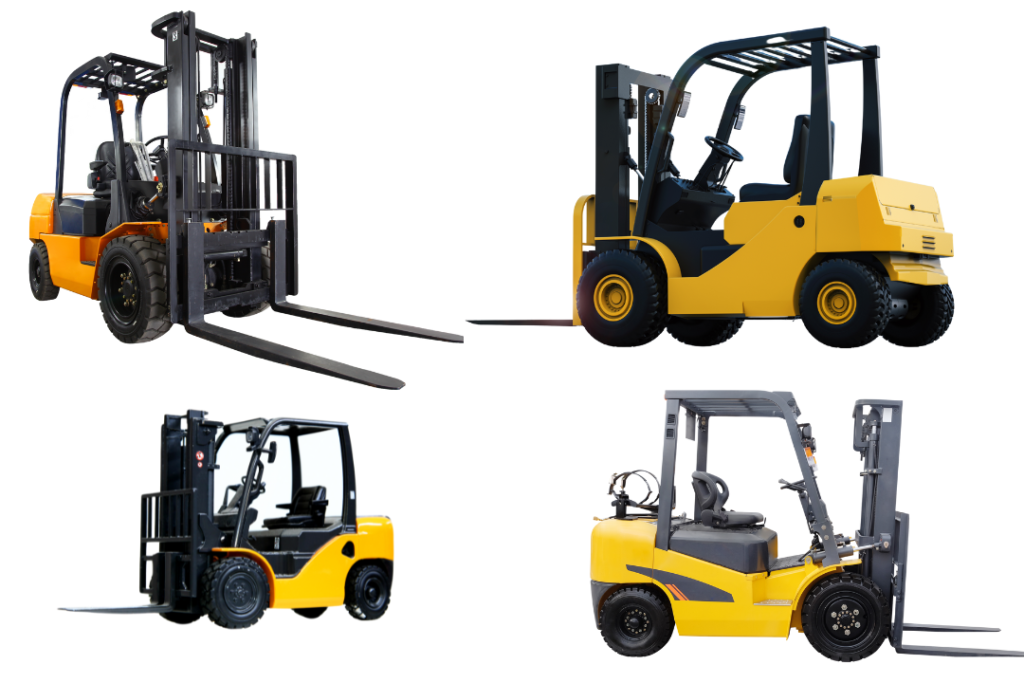
Rough terrain forklifts (also known as all-terrain lift trucks) are basically outdoor forklifts designed for operating in difficult environments where typical counterbalance forklifts would not work.
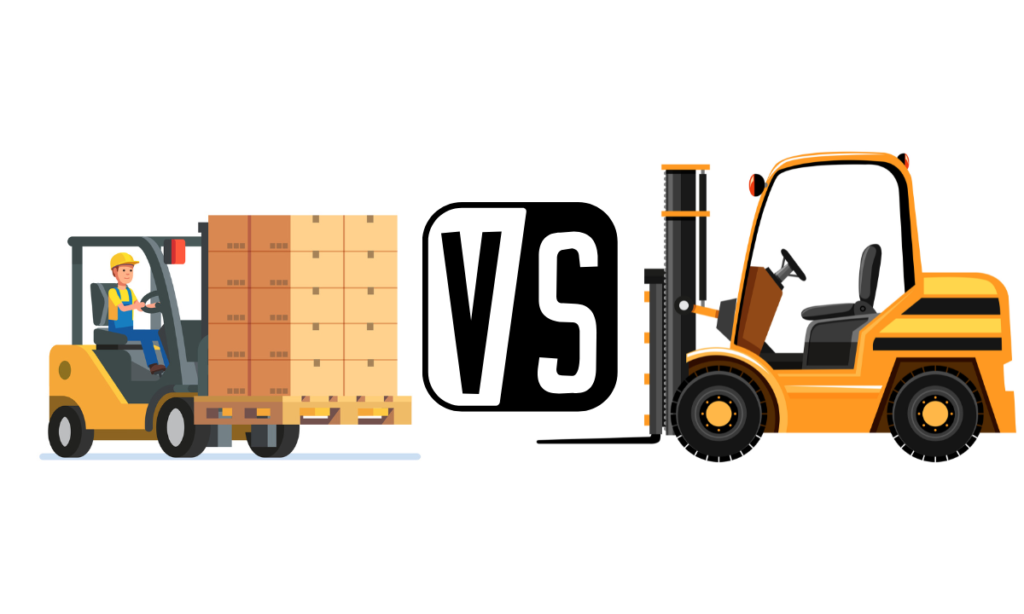
A conventional warehouse forklift is designed for use on a flat and smooth surface and small hard tires, while a rough terrain one is totally different. Most of the time, these machines have vertical masts although a few models come with telescopic booms (telehandlers) to give the operator extra reach and height.
They have a heavy-duty structure, with features such as a reinforced chassis and powerful engines that deliver high torque, which allows the vehicle to cover ground that is not stable and still be able to carry very heavy loads.
- Robust Tire Design: Large, air-filled tires with thick lugs are mounted on these vehicles. The deep divided treads provide foolproof grip on even the most broken surfaces such as earth, gravel, and mud.
- Superior Ground Clearance: Rough terrain forklifts have enough ground clearance to allow the machine’s bottom to clear rocks, tree roots, and other debris without getting damaged. This is very different from indoor models that always have low clearance.
- Four-Wheel Drive (4WD) Capabilities: The majority of the all-terrain models come with 4WD system that is able to transmit the power equally to all of the wheels. This makes it easy for the vehicle to climb very steep ramps and move over slippery surfaces without any difficulties.
Major uses of rough terrain forklifts
Having a rough terrain forklift would open up a great number of possibilities as to which industry sectors you could deploy it. These vehicles can be the lifeline of any outdoor operating company, helping the production process to flow seamlessly from the delivery truck right up to the last material’s point of use.
Whether at the construction site of a high-rise building or the lumber yard, these tough machines are always ready to go wherever they are needed.
- Construction Sites: The floors at construction sites are not level most of the time. Rough terrain forklifts are used for lifting and moving around materials such as steel beams, cement blocks, and pallets full of bricks on the uneven surfaces of dirt paths cluttered with debris.
- Lumber and Forestry: Transferring heavy logs and finishing timber is not going to be a problem for the equipment as it must not only have the capacity to handle the enormous weight but is also able to keep its balance while used on forest land and gravel yards.
- Agricultural Operations: Farmers find these forklifts very handy when loading and unloading hay bales, large bins full of fruit and vegetables, heavy machinery across the fields, and unpaved farm tracks irrespective of the weather conditions.
The incomparable advantages of rough terrain forklifts
Getting a rough terrain forklift from a trusted source like American Forklifts means that you are not just acquiring a lifting machine but a weapon in your arsenal that can turn the tides of your competitions in your favor.
They are shockingly robust machines that perform amazingly well in the long term, which means your hard-earned money is converting into returns, thanks to the higher equipment availability and lower cost of operations.
Multiplying efficiency through one multi-tasking piece of equipment will allow you to juggle less items and get rid of the specific ones that are specialized, single-use ones.
- Productivity Increase: Being able to run at higher speeds on rough surfaces, these forklifts greatly cut down the material handling time, which gives the work group the opportunity to be engaged in the main activities of the project.
- Operator Safety and Comfort: New generation rough terrain forklifts have ergonomics considered throughout all its components. To de-stress the operator, they have vibration-absorbing seats and cabins with their air filtering system. They are also equipped with electronic stability control which prevents the machines from rolling over on uneven ground.
- Savings on Costs: A company will be able to slash the size of its fleet and cut down on the maintenance costs just by simply settling on an equipment that can be a dual-purpose (indoor and outdoor use depending on the surfaces involved).
Technical Comparison: Rough Terrain vs. Standard Forklifts
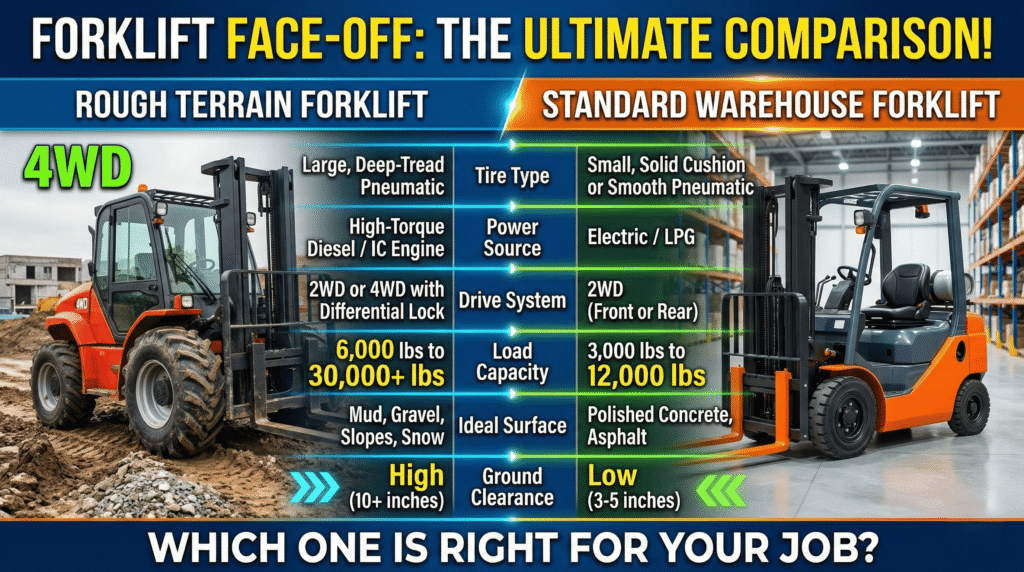
Here is an array of the major differences between all-terrain and traditional warehouse forklift units laid side by side in order to help you figure out which type of equipment goes well with your particular needs.
Table: Comparison – Standard Warehouse Vs. Rough Terrain Forklift
| Feature | Rough Terrain Forklift | Standard Warehouse Forklift |
| Tire Type | Large, Deep-Tread Pneumatic | Small, Solid Cushion or Smooth Pneumatic |
| Power Source | High-Torque Diesel / IC Engine | Electric / LPG |
| Drive System | 2WD or 4WD with Differential Lock | 2WD (Front or Rear) |
| Load Capacity | 6,000 lbs to 30,000+ lbs | 3,000 lbs to 12,000 lbs |
| Ideal Surface | Mud, Gravel, Slopes, Snow | Polished Concrete, Asphalt |
| Ground Clearance | High (10+ inches) | Low (3-5 inches) |
Choosing the Right Model for Your Fleet
There are a number of factors that you must carefully weigh when selecting a suitable rough terrain forklift besides the lift capacity alone. The query is December Park of your jobsite and if you will get there safely.
Depending on your requirements, you might find it worthwhile to invest in a model with a shorter wheelbase and a smaller turning radius that will allow you to work in a confined construction zone.
Alternatively, for a timber yard that is fully exposed to the sky, a heavy-duty model with a wide stance and maximum stability would be the right call. American Forklifts has a selection of models from which you can choose those that best fit your unique environmental conditions and thus, equipment-environment compatibility is guaranteed.
- Lifting Height Requirements: If your operation involves stacking in closed storage, the vertical mast is probably sufficient. However, if you want to be able to put materials on high scaffolding or rooftop, then a telescopic reach is necessary.
- Engine Performance: Diesel engines are the standard of outdoor heavy duty work as they provide high torque and are able to continue working for a long time without having to be refueled again.
- Attachment Compatibility: It would be good to look at whether or not the forklift will have the ability to be supplied with special attachments such as side shifters, log grapples and bucket attachments that will enable it to be used to the greatest extent possible on the site.
Maintenance and Longevity in Harsh Conditions
Maintaining a rough terrain forklift that is working in one of the hardest possible environments is an important issue. Dirt, mud and water can be very damaging to the parts of a standard forklift.
However, all-terrain models have sealed bearings and patriciate hydraulic lines, which significantly reduce the exposure to the elements. In addition, through regular maintenance and a well-planned service schedule, your forklift is going to be a dependable helper for many years.
- Daily Pre-Operation Checks: Tires, operating fluids, and the hydraulic hoses should be checked by the operator every morning to catch any minor faults which can be resolved easily before they turn into major problems.
- Tire Maintenance: Because of the abrasive effects of gravel and rocky soil, measuring the depth of the tread and analyzing for punctures must be done so as to retain proper traction and guarantee safety.
- Cleaning Regimen: Regularly clearing the undercarriage to get rid of the mud and corrosive (salt, chemicals) materials helps ward off rust and also prolongs the life of the chassis.
FAQ: Rough terrain forklift
What is the difference between an all-terrain and a rough terrain forklift?
There is hardly a difference in the two terms that are used in the industry. However, the term “all-terrain” is sometimes used in reference to machines that can move from paved to unpaved surfaces without hassle, while “rough terrain” indicates a machine that is working in the most demanding outdoor conditions, e.g., deep mud, steep rocky slopes.
Can I use a rough terrain forklift indoors?
It is technically feasible, but for regular warehouses, it is not advisable. Because of their large size, diesel emissions, and wide turning radius, they make it difficult to operate in narrow aisles. Further, their deep-tread tires are likely to wreck the floors of some types of buildings.
What license do I need to operate a rough terrain forklift?
Users of such machines are required to have an OSHA certification that is specific to the class of the forklift they will be operating. Usually, rough terrain forklifts are considered Class VII machines. In addition, the operator must undergo training that is specialized to the handling of the stability challenges which arise on uneven ground.
How much weight can a rough terrain forklift lift?
Each model is different in terms of capacity. Most of the off-the-shelf models can handle loads of between 6,000 and 12,000 pounds while specially made heavy-duty ones have a lifting capacity that can reach as high as 30,000/100,000 pounds.
Are rough terrain forklifts always 4-wheel drive?
Not necessarily, but undoubtedly, 4WD is a feature of most of the brand-new models that are made for serious outdoor works. There are some low-end models that might be 2WD only, however, such models are equipped with a locking differential which provides additional traction needs to be met breaking the rule that 2WD have less traction.
Why are diesel engines preferred for these forklifts?
Diesel engines produce the high torque that is required when a vehicle has to ascend a slope, or, in the case of this vehicle, lift up a heavy load in an outdoor environment. They also last longer and have a longer refueling interval than the electric ones, which is beneficial in remote locations.
Do rough terrain forklifts have suspension?
Indeed they do. Unlike warehouse forklifts, which have rigid frames, rough terrain models often feature heavy-duty suspension systems or oscillating axles to keep all four wheels in contact with the ground on uneven surfaces.