Forklifts for Food and Beverage Warehouses: Discover essential hygiene and safety tips!
Forklifts for Food and Beverage Warehouses: Hygiene and Safety Tips
Let’s be real for a second—running a modern food storage facility isn’t exactly like managing a lumber yard or a big-box retail backroom. You’ve got the FDA and OSHA breathing down your neck, and the stakes couldn’t be higher. One spilled pallet, a tiny exhaust leak, or a stray drop of grease, and you are suddenly staring down the barrel of a massive product recall, and a ruined inventory. This where one can manage their inventory using the best food and beverage warehouse forklifts.
When you manage logistics in this sector, you quickly figure out that grabbing whatever standard industrial equipment is on sale just isn’t going to cut it. That is exactly why selecting the right food and beverage warehouse forklifts is way more than just another operational choice; it is the absolute backbone of your compliance and safety strategy.
At American Forklifts (americanforklifts.org), we totally get the daily grind you face. Our entire mission is to help you seamlessly blend raw industrial lifting power with the kind of crazy-strict sanitation standards this industry demands.
We want to empower you to make smart, informed decisions and find the absolute best material handling solutions tailored specifically to your floor plan. In this guide, we are going to break down the real-world hygiene and safety tips you actually need to keep your facility humming along safely, cleanly, and profitably.
Why Specialized Forklifts Are Non-Negotiable in the Food Industry
If you spend enough time around the food and beverage industry, you know that the rules aren’t just suggestions—they are heavily enforced mandates. In these hyper-controlled environments, bringing in any kind of outside dirt, fume, or contaminant can literally shut your doors.
Trying to run a standard internal combustion (IC) forklift inside a closed food storage area is basically asking for trouble. Think about the exhaust emissions, the soot settling on packaging, and the very real threat of a fuel leak on a pristine floor. Because of this, specialized food and beverage warehouse forklifts are built totally different from the ground up.
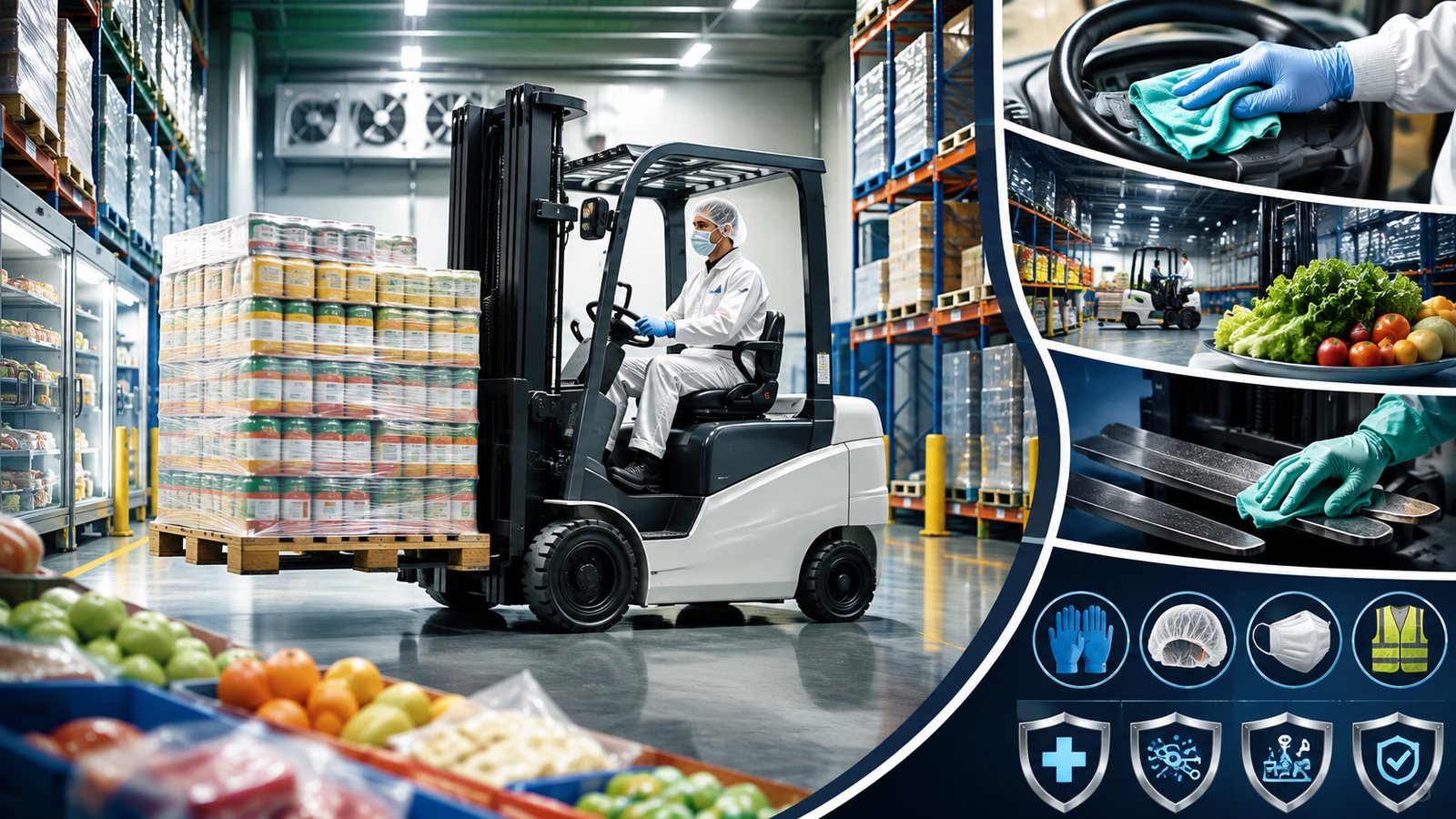
They feature sealed electrical components, rust-resistant stainless-steel parts, and emission-free electric batteries that keep the air clean. These specific trucks are engineered so your crew can wash them down quickly without water getting trapped in weird crevices where bacteria love to grow.
By investing in the right machinery, you aren’t just protecting the expensive perishable goods sitting on your racks; you are also making sure your warehouse crew isn’t breathing in toxic junk during a grueling ten-hour shift.
- Dodging Heavy Compliance Fines: Running specialized, food-safe equipment keeps you on the right side of OSHA and the FDA, meaning you don’t have to sweat it when a surprise inspector walks through your loading dock doors.
- Saying Goodbye to Toxic Fumes: By ditching gas and propane for high-efficiency electric power, you completely eliminate the carbon monoxide and exhaust issues that ruin indoor air quality and compromise fresh food.
- Stopping Bacteria Before It Starts: With features like sealed bearings and smooth, washable outer shells, these lifts make it incredibly hard for allergens, dirt, and bacteria to catch a ride from the loading dock into your clean zones.
Keeping Things Clean: Real-World Hygiene Practices
Anyone who has ever spent time on a warehouse floor knows that things get messy incredibly fast, and sweeping up once a shift barely scratches the surface. Food-grade forklifts have to go through some pretty brutal cleaning routines to make sure they aren’t dragging last week’s sticky soda spill all over the facility.
One of the best ways to handle this is by outfitting your fleet with specialized washdown packages. These packages basically waterproof the sensitive computer brains and motors of the lift, so your guys can hit them with high-pressure hot water and harsh chemical sanitizers without shorting everything out. But water is only half the battle; what about the moving parts? You absolutely have to swap out standard industrial grease for certified food-grade lubricants.
Normal grease is packed with toxic stuff, and if a single drop falls from the mast onto a box of produce, that entire batch is trash. On top of that, you need to set up dedicated charging and maintenance bays far away from where the actual food lives. You really don’t want battery acid, metal shavings, or brake dust floating over to your cold storage aisles while a mechanic is doing a brake job.
- Spraying Down Without Shorting Out: Equipping your lifts with heavy-duty washdown packages lets your cleaning crew go to town with power washers and sanitizers without accidentally frying the electrical system.
- Swapping to the Safe Grease: Moving entirely to certified food-grade lubricants means that if a minor drip ever does happen, it won’t create a toxic contamination hazard on your floor or your products.
- Quarantining the Maintenance Bays: Keeping all battery charging, fluid top-offs, and mechanical repairs in a totally separate wing of the building ensures dirty maintenance debris never touches your clean inventory.
Safety First: Keeping Your Crew Intact on the Floor
Hygiene gets all the headlines in the food industry, but making sure your crew actually goes home in one piece at the end of the day is just as critical. Food and beverage warehouses throw some really unique curveballs at drivers that standard dry-goods warehouses just don’t deal with.
For starters, you are constantly battling wet, slippery floors. Whether it’s a busted pallet of juice, condensation from the freezer doors constantly opening, or just the aftermath of a deep clean, wet concrete is a nightmare for standard tires. Your food and beverage warehouse forklifts need to be rolling on specialized, non-slip polyurethane tires that actually grip slick surfaces so your drivers don’t go sliding into a racking upright.
Then you have the freezer zones. Extreme cold absolutely murders battery life, thickens up standard hydraulic fluid until it’s like molasses, and makes standard plastic parts brittle. If your guys are working in the deep freeze, they need equipment specifically conditioned for cold storage.
Combine that with the fact that these warehouses are usually packed tight with narrow aisles, and you have a recipe for pedestrian collisions. You’ve got to lean on tech—blue safety spotlights, loud backup alarms, and proximity sensors—to give your pickers on foot a heads-up before a quiet electric forklift comes around a blind corner.
- Getting a Grip on Slick Floors: Ditching standard rubber for high-traction, non-slip polyurethane tires stops terrifying skids and gives drivers control even when the floor is covered in condensation or spilled liquids.
- Surviving the Deep Freeze: Using cold-storage conditioned lifts means your hydraulic fluid won’t freeze up, your batteries won’t die halfway through a shift, and your operators can actually get the job done in sub-zero temps.
- Lighting Up the Blind Spots: Throwing blue safety spotlights and audible alarms on every truck gives pedestrians walking the aisles an early warning system, drastically cutting down on those close-call near misses.
Picking Your Perfect Machine: What Actually Works?
You can’t just point at a catalog, pick the best-looking truck, and hope it works out on your floor. Figuring out the exact right material handling setup takes a really hard look at how much space you have, how high you need to lift, and what kind of environment you’re dealing with.
In the food and beverage game, different zones require totally different machines. Solid, electric counterbalance forklifts are the heavy lifters—they are completely emission-free, surprisingly quiet, and pack the muscle needed to unload heavy pallets straight off the delivery trucks.
But what happens when you move into the actual storage aisles? Space is expensive, so food warehouses usually run incredibly narrow aisles to cram more product into the building. That’s where reach trucks shine; they are designed to squeeze into those tight gaps and push pallets insanely high without tipping over.
And for the guys running around doing order picking or moving stuff across the dock horizontally, electric pallet jacks are an absolute lifesaver that keeps them from blowing out their backs.
At American Forklifts, we love helping people figure this puzzle out. We look at your aisle dimensions, your rack heights, and your freezer setups to match you with the exact food and beverage warehouse forklifts that will make your life easier.
- Going Heavy with Electric Counterbalance: These are your everyday workhorses that give you the raw lifting power of a gas truck but with the zero-emission profile required for indoor food safety.
- Squeezing into Tight Spaces with Reach Trucks: When your aisles are narrow and your racks touch the ceiling, reach trucks let you maximize every single square inch of your expensive real estate safely.
- Speeding Things Up with Electric Pallet Jacks: Swapping out manual jacks for electric ones speeds up order picking immensely while saving your warehouse crew from physical exhaustion and potential injury.
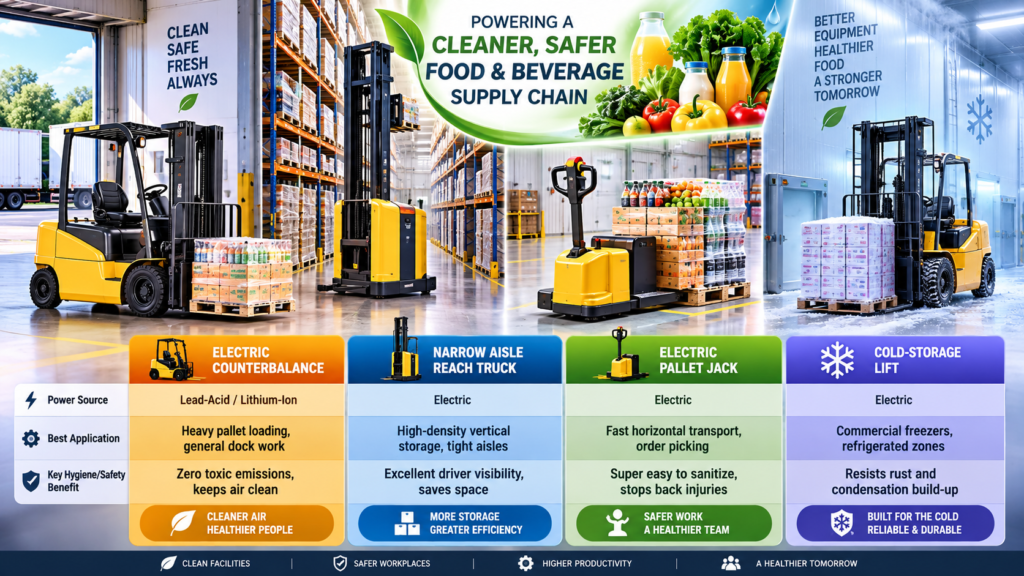
Table: Food and beverage warehouse forklifts
| Forklift Type | Power Source | Best Application | Key Hygiene/Safety Benefit |
| Electric Counterbalance | Lead-Acid / Lithium-Ion | Heavy pallet loading, general dock work | Zero toxic emissions, keeps air clean |
| Narrow Aisle Reach Truck | Electric | High-density vertical storage, tight aisles | Excellent driver visibility, saves space |
| Electric Pallet Jack | Electric | Fast horizontal transport, order picking | Super easy to sanitize, stops back injuries |
| Cold-Storage Lift | Electric | Commercial freezers, refrigerated zones | Resists rust and condensation build-up |
Integrating American Forklifts into Your Warehouse Strategy
Finding the right equipment partner is honestly just as important as the safety rules you put on the wall. Welcome to American Forklifts, your main source for tracking down the absolute best forklifts for sale in the USA.
We don’t just want to sell you a piece of metal; we offer thorough, in-depth details about top-notch forklifts found all throughout the country so you know exactly what you are getting.
Our whole vibe is about being a trusted partner to help you navigate the confusing world of material handling, giving you unbiased reviews and stuff you can actually learn from. When you bring our expertise into your planning process, you get access to setups that perfectly blend raw power with those unwavering safety standards you have to meet.
We know firsthand how much money gets burned on hidden expenses when unsafe forklifts break down constantly or cause accidents. That’s why we push for transparent, real-world advice to make sure you select the right food and beverage warehouse forklifts that keep the FDA happy and your operations running fast.
Using our resources means you can confidently build out a fleet that protects your food, keeps your workers safe, and actually helps your bottom line grow.
- Skipping the Sales Pitch for Real Advice: We give you the unbiased, objective truth about what equipment actually works, so you can make a confident choice without feeling like you’re being taken for a ride.
- Putting Safety Front and Center: We only partner with and recommend setups that prioritize cutting-edge safety add-ons, ensuring your team has the tools they need to avoid expensive warehouse accidents.
- Finding a Custom Fit for Your Floor Plan: We look closely at your specific pain points and offer tailored comparisons to help you lower your maintenance bills and streamline how your warehouse flows.
FAQ’s About Food and beverage warehouse forklifts
What type of forklift is required for an indoor food warehouse?
If you are moving food indoors, electric forklifts (running on either lead-acid or lithium-ion batteries) are the absolute industry standard. You really want to steer clear of internal combustion (IC) forklifts that run on propane or diesel. They spit out carbon monoxide and dirty exhaust fumes that will contaminate your food products and make your workers sick.
Are OSHA and FDA regulations different for food-grade forklifts?
They definitely overlap, but they are looking at two totally different things. OSHA is the watchdog for your people—they care about seatbelts, proper driver training, and making sure the forklift isn’t overloaded. The FDA is the watchdog for the food—they care about making sure your forklift isn’t leaking toxic grease onto the floor or carrying bacteria from the loading dock into the clean room.
Why do forklifts need food-grade lubricants in a warehouse?
Standard industrial grease is packed with chemicals you definitely don’t want to eat. In a busy warehouse, a forklift’s mast or hydraulics can sometimes drip. If a drop of standard oil lands on an apple box, or even just on the floor where boots track it around, you’ve got a toxic hazard. Food-grade lubricants are specially engineered to be non-toxic just in case this kind of incidental contact happens.
How do cold storage environments affect forklift operations?
Freezers are absolutely brutal on standard machinery. The deep cold makes normal hydraulic fluid turn thick and sluggish, it drains standard batteries incredibly fast, and moving in and out of the cold zone causes condensation that rusts out electronics. You have to use a lift with a specific cold-storage conditioning package to survive that environment.
What is a washdown forklift package?
Food facilities get cleaned constantly, often with high-pressure hot water and harsh chemical foams. A standard forklift’s electrical system would fry under that abuse. A washdown package adds heavily sealed electrical boxes, special waterproof coatings on the motors, and rust-proof parts so your cleaning crew can blast the lift without destroying it.
How often should forklift operators in food facilities be trained?
OSHA legally requires operators to be fully trained before they touch a steering wheel, and you have to evaluate them at least once every three years. But honestly? In a high-stakes food environment, waiting three years is a mistake. The best warehouses run quick annual refreshers on how to handle spills, hygiene rules, and pedestrian safety to keep everyone sharp.
What are the most common forklift accidents in beverage warehouses?
Beverage warehouses are notorious for wet floors from dropped pallets or condensation. Because of this, sliding out of control and crashing into racks is incredibly common. You also see a lot of tip-overs from drivers taking corners too fast, and sadly, pedestrian collisions in tight aisles. That’s why non-slip tires and strict speed limits are life-savers.
Conclusion – Food and beverage warehouse forklifts
Trying to run a smooth material handling operation in the food and beverage industry is a massive juggling act. You have to move fast to keep up with demand, but you have to be perfectly clean and incredibly safe while doing it.
The margin for error is basically zero; one broken hydraulic hose or a lazy cleaning routine can wreck your inventory and drag your company’s reputation through the mud. By spending the money upfront on specialized food and beverage warehouse forklifts—the ones with zero emissions, safe food-grade grease, grippy non-slip tires, and heavy-duty washdown armor—you build a warehouse that runs like a tank but stays as clean as a kitchen.
At American Forklifts, we are obsessed with being the partner you can actually trust to figure this out, offering the honest insights you need to grow your business without compromising safety. If you want to stay ahead of the game, just remember these three things:
- Don’t Cheap Out on the Wrong Truck: Standard warehouse lifts will inevitably fail you (and fail your health inspections) in a food-grade environment.
- Train Like Lives Depend on It: Giving your crew constant, updated training is the absolute best insurance policy against a disaster on the floor.
- Lean on the Experts: Don’t guess. Use trusted guys like us at American Forklifts to help you navigate the tricky stuff so you can focus on running your business.