Forklifts for Manufacturing Facilities: How to Optimize Material Handling
Walk onto any busy manufacturing floor, and you’ll instantly feel the rhythm of the place. It’s a constant, humming flow of raw materials coming in and finished products heading out. Anyone who has managed a facility knows that keeping this flow uninterrupted is half the battle of running a profitable business which can be solved using forklifts for manufacturing facilities.
When bottlenecks happen, production grinds to a halt, and money goes right down the drain. This is exactly why finding the right forklifts for manufacturing facilities is so much more than just a routine equipment purchase. It’s a strategic move.
At American Forklifts, we always tell our clients that your machinery should work with your layout, not against it. When you take the time to really optimize material handling, you transform your warehouse from a chaotic space into a smooth, highly productive engine.
The goal is to move things faster, safer, and cheaper. Whether you’re navigating tight indoor aisles or managing a massive outdoor lumber yard, understanding how these machines impact your daily grind is the first real step toward getting the most out of your facility.
- Boosting your daily output: When your team can move materials from the dock to the production line without hiccups, your manufacturing output stays exactly where it needs to be—at its peak.
- Cutting down on wasted money: A smooth workflow means less idle time for your workers, less wear and tear on your expensive machines, and far fewer damaged goods during transit.
- Keeping your people safe: The right equipment does the heavy lifting so your crew doesn’t have to, dropping the risk of workplace injuries and keeping your floor compliant with safety regulations.
Choosing the Right Forklifts for Manufacturing Your Specific Needs
You wouldn’t use a sledgehammer to drive a tiny nail, and the same logic applies to picking out industrial equipment. There is no one-size-fits-all solution here. Navigating the market requires a solid look at what your daily operations actually demand.
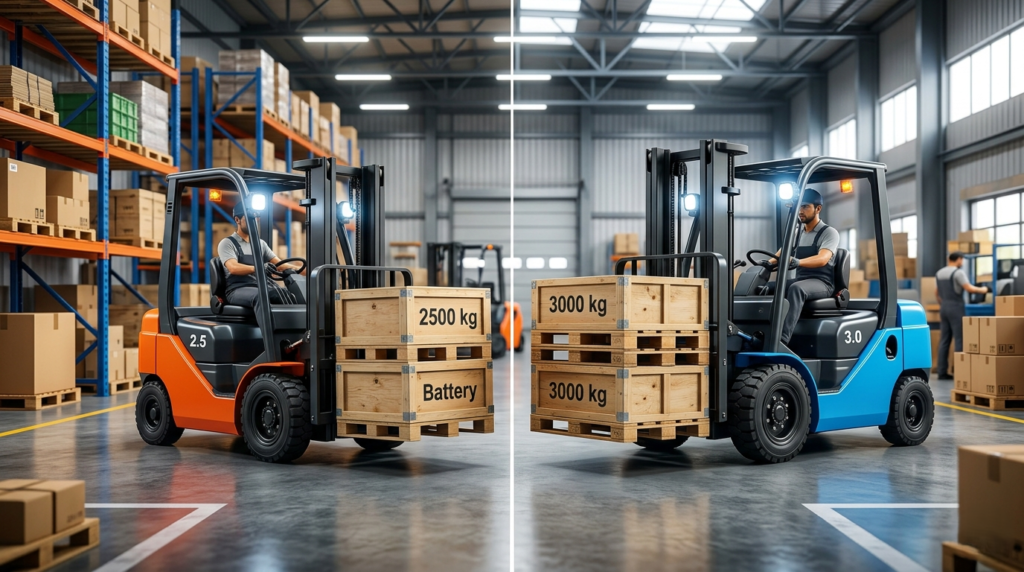
For instance, if your facility is mostly indoors with narrow racking aisles, you’re going to want an electric counterbalance forklift or a reach truck. They’re quiet, they don’t pump out exhaust, and they can turn on a dime.
On the flip side, if your crew spends all day outside moving heavy, raw materials over uneven ground, those indoor electric lifts just won’t cut it. You’ll need the raw power of an internal combustion (IC) model. At American Forklifts, we’ve seen too many businesses lose money because they bought a machine that didn’t fit their space.
To truly optimize material handling, you have to pull out the tape measure, check your load weights, and be honest about your environment. Partnering with a team that offers unbiased reviews can save you a ton of headaches down the road.
- Know your load limits: Take the time to evaluate the maximum weight, awkward shapes, and standard dimensions of the materials you move every day to avoid overworking your lifts.
- Measure your space twice: Don’t guess your aisle widths, door heights, or turning spaces. An inch can be the difference between a smooth turn and a damaged storage rack.
- Pick the right power source: Base your choice between electric, diesel, or propane on your building’s ventilation, how much time the lift spends outdoors, and your company’s long-term green initiatives.
Smart Strategies to Smooth Out Your Workflow
Buying a great piece of machinery is a solid start, but how you use it on the floor is what really moves the needle. Getting the most efficiency out of your day is a constant process of tweaking and improving. When warehouse managers decide it’s time to optimize material handling, they have to step back and look at the big picture of how traffic flows through the building.
One of the simplest yet most effective things you can do is map out your routes. Think of it like city planning for your warehouse; if your forklifts for manufacturing facilities are constantly crossing paths or waiting for pedestrians, you are losing valuable time. Creating dedicated, one-way travel lanes cuts down on traffic jams and massively reduces the chance of accidents.
Beyond just painting lines on the floor, modern facilities are tapping into fleet management software. This tech lets you see exactly how much your machines are actually being used versus just sitting idle, helping you plan maintenance without killing your production schedule.
- Map out your traffic flow: Paint clear, dedicated driving lanes and separate pedestrian walkways to stop congestion before it starts and keep everyone safe.
- Use data to your advantage: Hook up telematics to your fleet so you can track battery health, actual drive times, and schedule maintenance only when you really need it.
- Stage materials smarter: Keep your raw materials and finished products as close to their final destinations as possible. Shorter travel distances mean faster turnaround times.
Building a Culture of Safety and Routine Maintenance
Let’s be real for a second: in this industry, safety and productivity are two sides of the same coin. You simply can’t run an efficient floor if people are getting hurt or machines are breaking down.
Treating your equipment with respect is absolutely non-negotiable. Operating heavy machinery carelessly doesn’t just put your team in danger; it leads to hidden costs like smashed inventory, expensive workers’ comp claims, and ruined storage racks.
If you want to optimize material handling, you have to build a safety culture from the ground up, starting long before anyone turns a key. We always push our clients at American Forklifts to get religious about their daily pre-use inspections.
It sounds tedious, but catching a frayed hydraulic line or a bad brake pedal early saves you from a massive headache mid-shift. Regular, proactive maintenance keeps these machines running for years, protecting your investment and your crew.
- Make daily checks mandatory: Use a simple, documented checklist to look over tire conditions, mast chains, fluid levels, and basic safety features before every single shift begins.
- Don’t wait for things to break: Get on a tight schedule with certified technicians for routine servicing. Changing fluids and replacing worn parts early adds years to your forklift’s life.
- Train for load stability: Teach your operators how to handle weirdly shaped loads, center their forks properly, and never push the machine past its rated weight limit.
Upgrading with Attachments and Modern Tech
The material handling world is changing fast, and keeping up with the latest tech isn’t just for show—it’s how you stay ahead of the competition. Today’s forklifts for manufacturing facilities are incredibly smart machines packed with sensors designed to make the operator’s job easier and safer.
Forward-thinking managers are looking at these upgrades to get more out of their current fleets. For example, sensor-equipped systems can now spot a pedestrian walking around a blind corner and automatically slow the forklift down. It’s like having a co-pilot focused purely on safety.
Then you have specialized attachments. Instead of struggling with standard forks, you can swap them out for paper roll clamps, side shifters, or 360-degree rotators. These tools let your team grab, shift, and place tricky loads perfectly on the first try. Adding the right tech to your lifts means faster work, less damaged product, and operators who aren’t exhausted by the end of the day.
- Invest in safety tech: Look into blue safety lights, backup cameras, and proximity sensors that give your drivers a better sense of what’s happening around them.
- Use the right tool for the job: Grab specialized attachments like hydraulic fork positioners or custom clamps so your team can handle unique materials without dropping or crushing them.
- Focus on driver comfort: An uncomfortable driver makes mistakes. Adjustable suspension seats and easy-to-reach controls keep your operators sharp during those long eight-hour shifts.
Weighing Your Options: Electric vs. Internal Combustion
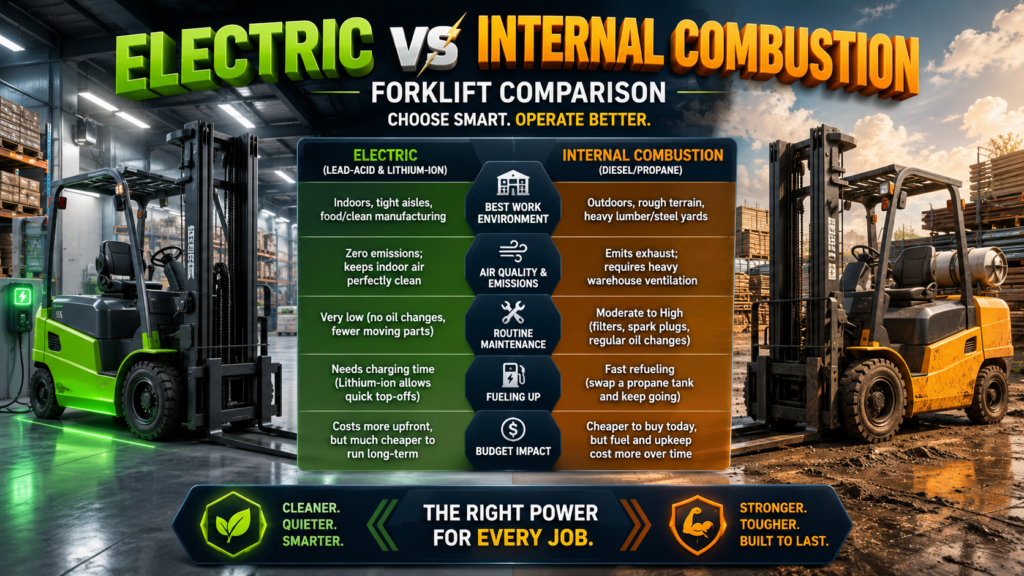
One of the biggest conversations we have with clients looking at forklifts for manufacturing facilities revolves around how to power them. The choice between an electric battery and a traditional Internal Combustion (IC) engine makes a massive difference in your daily running costs and your building’s air quality.
IC forklifts (usually running on propane or diesel) are the old reliable workhorses. They bring serious power, can handle rain and uneven yards, and refuel in a matter of minutes.
However, electric forklifts are completely taking over the indoor manufacturing scene. They are quiet, they don’t spit out toxic exhaust fumes, and because they have fewer moving parts under the hood, they rarely break down. With the newer lithium-ion batteries hitting the market, you can even charge them up while your driver is on a quick lunch break.
You really have to sit down and run the numbers for your specific situation to figure out which one actually makes sense for your bottom line.
Table: Forklifts for Manufacturing Features Comparison
| Feature / Consideration | Electric (Lead-Acid & Lithium-ion) | Internal Combustion (Diesel/Propane) |
| Best Work Environment | Indoors, tight aisles, food/clean manufacturing | Outdoors, rough terrain, heavy lumber/steel yards |
| Air Quality & Emissions | Zero emissions; keeps indoor air perfectly clean | Emits exhaust; requires heavy warehouse ventilation |
| Routine Maintenance | Very low (no oil changes, fewer moving parts) | Moderate to High (filters, spark plugs, regular oil changes) |
| Fueling Up | Needs charging time (Lithium-ion allows quick top-offs) | Fast refueling (swap a propane tank and keep going) |
| Budget Impact | Costs more upfront, but much cheaper to run long-term | Cheaper to buy today, but fuel and upkeep cost more over time |
- Think about your air quality: Make sure your equipment aligns with your local indoor air regulations and keeps your workers breathing easy.
- Look at the total price tag: Don’t just look at the sticker price. Factor in what you’ll spend on electricity versus diesel fuel, plus maintenance, over the next five years.
- Plan around your shifts: Figure out if your team can manage a battery charging schedule or if your round-the-clock operations require the instant refueling of a propane tank.
Empowering Your Team Through Proper Training
Here is the reality of the business: you can buy the most expensive, high-tech piece of equipment on the market, but it’s completely useless if the person driving it doesn’t know what they’re doing. When you are trying to optimize material handling, the human element is where you win or lose.
Good training isn’t just a box you check for OSHA; it is the foundation of a smooth-running floor. At American Forklifts, we always recommend a structured 4-stage operator training checklist to get new hires up to speed. But it shouldn’t stop at the basics.
Your drivers need to understand the quirks of your specific facility, how to handle emergencies, and how the weight dynamics of their loads change when they turn a corner. When you invest time and money into making your operators confident and skilled, they work faster, break fewer things, and take real pride in their machinery.
- Go beyond the basics: Make sure your training program mixes solid classroom time with tough, real-world practical driving tests.
- Customize it to your floor: Don’t use a generic video. Train your crew on the specific blind spots, ramps, and load types they will actually deal with every day in your building.
- Keep the learning going: Host regular refresher sessions to keep safety top of mind and get your team up to speed whenever you bring a new piece of tech into the warehouse.
FAQs About Forklifts for Manufacturing
What is the best forklift for a manufacturing facility?
It honestly depends on where you are using it. If you’re inside most of the day, a 3-wheel or 4-wheel electric counterbalance lift is your best bet because it’s clean and turns tightly. If your work is out in a dirt yard moving heavy pipe or lumber, you’ll definitely want a diesel or pneumatic tire IC forklift that can handle the elements.
How can I optimize material handling in my warehouse?
Start by looking at your floor plan. Paint clear travel lanes to stop traffic jams, upgrade to machinery that fits your aisle sizes, and start using fleet management software to track how your lifts are actually being used. Better training for your drivers also instantly speeds up your workflow.
How long do electric forklifts actually last?
If you treat them right and keep up with battery maintenance, a good electric lift will easily give you 10,000 to 12,000 hours of work. If you’re running a standard single shift, you can expect about 5 to 7 solid years before you need to think about replacing the battery or major parts.
Why are daily forklift inspections such a big deal?
Aside from being legally required by OSHA, doing a quick walk-around every morning is how you catch a small leak before it turns into a blown hydraulic hose. It keeps your operators safe, prevents accidents, and saves you a fortune in emergency repair bills.
What is the main difference between a reach truck and a standard forklift?
A standard counterbalance forklift has heavy weight in the back to balance the load in the front, making it great for general dock work. A reach truck is built specifically for tight spaces; it has a mast that extends forward to “reach” into deep pallet racks without the whole machine needing to turn.
Just how much weight can a warehouse forklift lift?
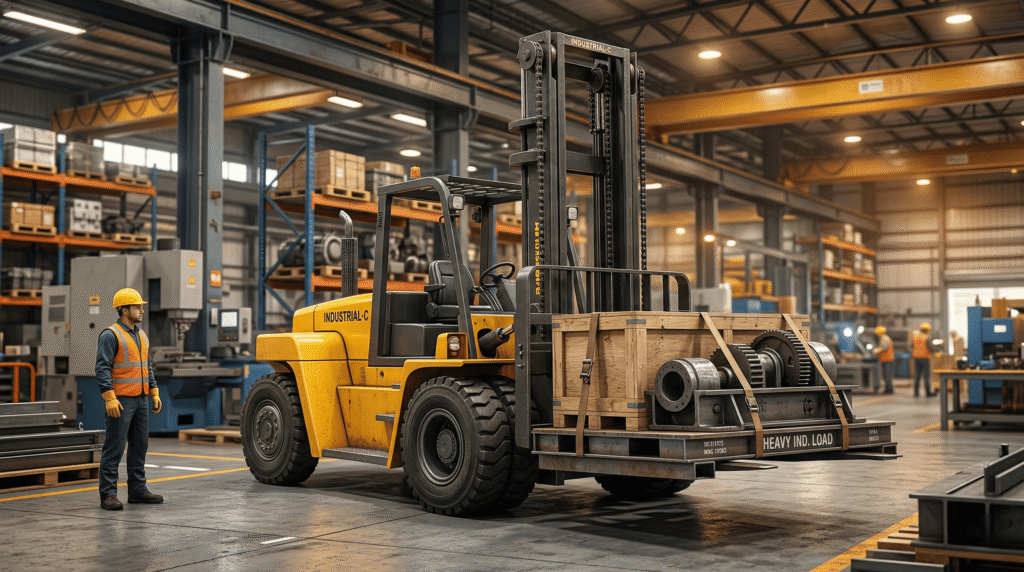
Your average everyday warehouse forklift maxes out around 3,000 to 5,000 pounds. But if your manufacturing facility handles massive stuff like steel beams or concrete, you can easily buy heavy-duty models designed to lift 15,000 to 35,000 pounds safely.
Are those new lithium-ion batteries worth the extra money?
For most fast-paced facilities, absolutely. They cost more upfront, but they charge incredibly fast (you can plug them in during a 30-minute lunch break), they don’t require daily watering, and they last significantly longer than the old-school lead-acid batteries.